




It's not hard to fly a kite, but we have compiled some helpful tips and tricks to pass on to you to make your kiting experience as enjoyable as possible. If you have a question or would like to share some of your kiting tips with us, send an email to info@newtechkites.com

What is Appliqué Design?
How to launch single line kites...
Kites for Kids?
What a Drag!
Tall Tails?
How long should my kite line be?
How do I tie this darn, knot?
Recommending Single Line vs. Sport Kites
Sport Kite flying? Things to remember:
Meet our friend Beaufort...
Why does this delta I just bought fly funny?
Why won?t my kite fly?
Why are there three different spots to tie my line on this keel?
I have lost or broken a part of my kite... How do I get a replacement?
What is Appliqué Design?
Appliqué is a technique by which a fabric cutout piece is sewn onto a larger piece of material. The various pieces of fabric are carefully laid out, creating a sandwich that includes a layer of every color used in the graphic. Once this phase is complete, a razor and scissors can be used to carefully cut away each layer of fabric, leaving only the top, to reveal a
stained glass effect in the art. Although beautiful in the sky, the back cut appliqué technique
is both labor and materially intensive.
<< back to Top
How to launch single line kites...
1. Kites fly best in wide open spaces. Avoid flying in areas near buildings and trees.
2. To launch, stand with your back to the wind.
3. Hold the kite with the nose up in one hand while securely holding the winder in the other.
4. When you feel the pressure of the wind against the kite, let go. As the kite rises, slowly release the line.
5. A high altitude launch is an effective method of getting your kite off the
ground in light winds. Have someone stand downwind as you let out as much line
as possible (> 100 feet). As the kite is released into the wind, tug on the
line.
<< back to Top
Kites for Kids?
Children around the ages of 6 start having success launching kites solo. More complex designs will still require assembly by adults.
With adult assistance and supervision, children over 2 years of age should be able to fly kites that are launched. Children under the age of 2 tend to let go of the line without warning.
<< back to Top
What a Drag!
Need some extra stability in high winds? Attach any windsock or wind spinner to your kite for added control. Try our Blaze! The latest design from Martin Blais!
<< back to Top
Tall Tails?
The higher a kite goes, the smaller it looks. Many people like to add streamer tails or tube tails from the kite. The spectacle and fun is multiplied.
<< back to Top
How long should my kite line be?
Most of our kites include 150 feet of line. Some kite enthusiasts like to fly to the clouds. Stock up on extra line to maximize your sales.
<< back to Top
How do I tie this darn, knot?
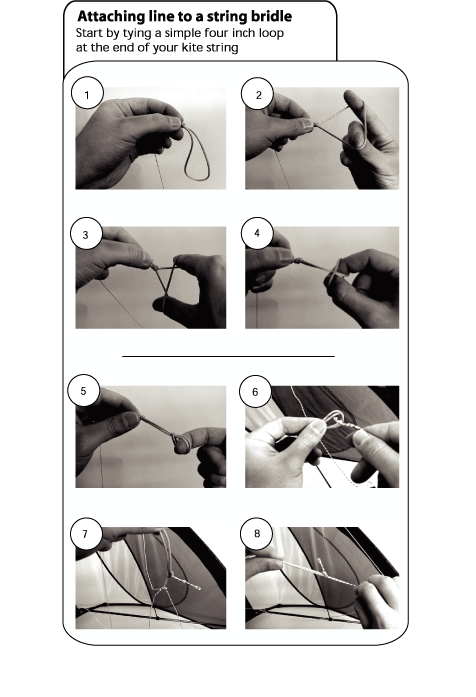
<< back to Top
Recommending Single Line vs. Sport Kites
Single line kites are stable and generally fly themselves once they are launched. Their peaceful, ?Zen? like qualities enable them to be secured to an anchor so you may watch from a distance.
Sport kites (also known as stunt kites) are steer able and offer the pilot complete control. They are very maneuverable and go up, down or loop. Advanced sport kites offer even more spectacular performance abilities.
<< back to Top
Sport Kite flying? Things to remember:
1. Let out all of the line you will be flying with before launching.
2. Be sure that your line lengths are equal.
<< back to Top
Meet our friend Beaufort...
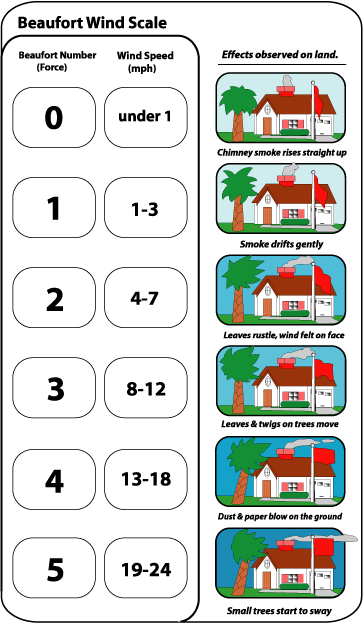
<< back to Top
Why does this delta I just bought fly funny?
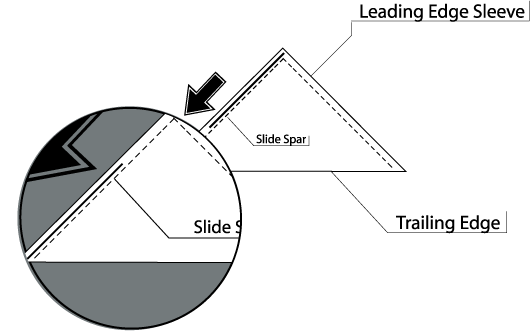
<< back to Top
Why won?t my kite fly?
1. Your kite is out of the wind range. There is either too much, or not enough wind for stable flight.
2. Your kite is not assembled correctly. (see your instructions available for download here.)
3. The bridle or tow point is off. Many of our Deltas have a low regular and high wind settings. Parafoil and others have a tow ring that may no longer be in the right position. To adjust a tow ring, first find the tow point by holding the kite up as if launching. Next slide your finger until you feel where the kite wants to lift and note this point. Finally loosen the knot and move the ring into the correct position and tighten the knot, simple and easy!
<< back to Top
Why are there three different spots to tie my line?
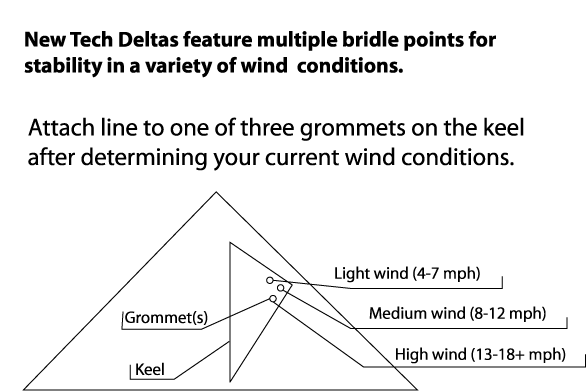
<< back to Top
I have lost or broken a part of my kite... How do I get a replacement?
You must first know what you need, for this you need to know what type of kite
you have. You should also know which piece is missing (see diagrams). If these
questions baffle you, then measure the piece from the other side of the kite.
If it is the only piece of it's type, measure the sleeve it goes in. Check our
Links page for Kite Parts and Kite Building or contact
us through Email, but please bear
in mind that shipping a single piece is costly. We may also refer you to the
nearest source if it is suitable.
<< back to Top
